
by Hazel Anna Rogers for this Carl Kruse Blog
“Dr. Jeffries will see you soon”. After another thirty minutes, I ask the receptionist again: “Dr. Jeffries should just be finishing up”. In the waiting room, I had tried to read. I must’ve appeared to be sneaking up on my book, catching glimpses of it at acute angles. I had already spoken to a doctor but it wasn’t her field. It was Dr. Jeffries’. This was three hours ago. When the elusive Dr. Jeffries arrived, he was already in a rush. He asked me to follow and led my down the busy corridor; patients falling into rooms and strange machines slumped in corners. Where we ended up was quiet and low-lit, a room somewhere in the hospital. He sits down and I tell him the deal: I woke up this morning and I was near blind.
Large patches of my vision were opaque, a dull grey, and I had swarms of swimming particles racing around across my vision. Sometimes too, the larger swathes of opaque grey would move en masse. I could make my way around by articulating my head at certain angles, tricking the matter in my eye, tricking the blind spots. Light pierced my sight as shimmering waves. I called my optometrist and explained. They say go to the hospital immediately. Jeffries became very interested in me at this point. He was the chief ophthalmologist at the hospital and he was slightly puzzled. I was injected with a fluorescent dye that would enable him to study my eyes in depth. He found lesions at the back of both of my eyes, which had, apparently, manifested spontaneously.
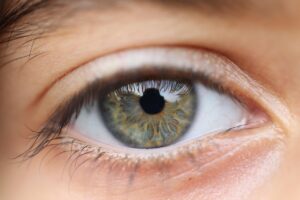
I was diagnosed with APMPPE (Acute posterior multifocal placoid pigment epitheliopathy). Dr. Jeffries assured me that it would fade with time and that just sometimes this happens. He then asked if he could bring his students in to take a look. One by one, they came in, looked into my eyes, and then thanked me. Dr. Jefferies once again assured me. I went home besieged by scotomas (the grey blind spots), photopsia (light flashes, shimmering), and an unreal feeling. Thin reality, alienating reality, wide and large and strange reality, with such things in it.
The late Oliver Sacks did his most to remind us of the personal, existential, journeys of neurology and bodily maladies. He revived the lost art of the medical narrative, what his friend, the great Russian father of Neuroscience, A.R. Luria, called the ‘medical romance’. The onset of neurological uncertainty, ruptures, is not habitual. We live in the narrow confine of the affirmative body, the vital body, the body that goes and the mind that reads experience only for its needs. An everyday self-centredness. If it’s true, as a psychologist might have it, that our personhood likes an internal narrative saying this is ME, this is what I am like, then these departures are a strange side-plot leaving the actor adrift. When the deviation is passed, how much more keenly life is lived. How much of life is, though, some kind of frailty, sickness, delusion, that we could not live without? The abnormalities that suddenly upend, or stifle a life, force a change in living, force a change in personality are that much more striking than the week-long spat in bed. It takes a major accident to become acquainted with the bone, muscle, tendon, that are always so unconscious to perception, and the abnormalities that can permeate the mind shows us the thin line that draws our reality, makes a mockery of our certainty, and emboldens us to our own natures.
The evolution of the functioning eye begins around 550 million years ago, the earliest surviving fossil is from 530 million years ago, a primitive compound eye similar to present day dragonflies and bees. Before that, there was some kind of light-sensitive spots of perception, ‘eye-spots’, only distinguishing light from dark. In our times, the basic pattern of all vertebrate eyes is comparable. Nature gives life cues toward vision, greater resolution, and when that limitation is reached, our technological extensions approach greater exactment. But what is it we see? Dedicated solely to Darwinisms? To specialities of science? After many millions of years, one day, my eyes erupted in lesions. However things evolve, with what will, there are always imperfections and unexpected functions… if the needs are met, the functioning efficient, we pat our bellies and say well of course nature didn’t’ sculpt our faculties senselessly… but then things fall apart: an outlier, a can’t-be. It is an ongoing dynamic of the senses and reality that lights our way.
The common eye is prone to generalisations for if we had to reckon with every detail that reality presents we would be obliterated before getting out of bed. Dr. Jeffries was right and slowly day by day my sight re-adjusted, but not without some remnants, so, really, changed. If I shut my right eye, the left distorts my vision, and this is no problem of needing stronger prescription, because I can dip my head to the side and read the letters on the board. The general optometrist doesn’t seem to mind. As my vision was clearing up, light took on a new character. A full moon would be superimposed with sometimes three moons. Light streamed out of street lamps. Haloes abounded. Things were different, and I had to be too for I saw differently.
At this time, I had heard of people speaking of reality like a collection of ideas, denying material existence altogether. You find this everywhere, in religions and philosophy. Two worlds, one imperfect and the other perfect. One a phoney imitation, an illusion, a dream… the other, finally certain. I cannot say either way but why this turning away from reality, our only bridge? To be perceived is the ultimate affirmation, and why does attraction suddenly burst into sight? And does not all of nature reveals itself with a second sight, isn’t life transformed when the eye becomes trained to see? Isn’t it a failure not to look into the ever-changing, ever-changeable, both inside and out? Italo Calvino had more than an interest in perception. His last book, Mr. Palomor, is for the love of perception. The eponymous has taken on himself to observe in intensity. He watches the waves lapping the shore, the garden, the sun etc. in efforts to comprehend the depth that dwells within surfaces. Every object is a forked road of feeling and thought, and how we attend to reality is how reality answers us. However glad to have my sight returned I couldn’t help think reality appeared somewhat dim when my eyes healed… as some sickness lays off and we are again in the din of the world… I do not see three or more moons anymore, but I know they are somewhere, in my eyes or elsewhere.
================
The homepage for this Carl Kruse Blog is at https://carlkruse.at
Contact: carl AT carlkruse DOT com
Other articles by Hazel include The Death of Analogue, The New Journalists, and On Ancient Travel Writing.
Also find Carl Kruse over on Clearvoice.
